Last updated September 24, 2026
New windows and doors improve comfort, cut energy bills and add long-term value to your home. Sightline Windows & Doors Olympia Heights pairs proven product lines with our own installing crews for lasting performance - and a price we put in writing.
1. Choose your installer
The unit is half the job - the install is the other half. Our own background-checked crews measure, set, seal and insulate every opening, and they know the lines we quote inside and out because they install them every week.
2. Select the right products
Compare styles, materials and glass packages side by side until the fit is right for your rooms, your budget and your goals. The product-line comparison below is the place to start.
3. Prepare your home for install
Before install day we walk you through a short checklist - furniture pulled back, treatments down, a clear path to each opening - so install day is watch-it-happen, not scramble.
Compare the Lines We Quote
Every project is priced on the same lines, side by side - the price indicators below are relative, and your consultant shows exact numbers on your actual openings.
PGTThe line Florida homeowners arrive naming - the most Miami-Dade certifications in the industry$$$
- More Miami-Dade NOA certifications than any other line we quote
- WinGuard, EnergyVue and ClassicVue Max systems built for every wind zone
- 99% on-time delivery keeps your install date on the calendar
CGIThe heavyweight impact line$$$$$
- Large-missile impact ratings for the strictest wind zones
- Architectural-grade aluminum with commercial-depth frames
- The line we quote when protection is the whole point
CWSThe Florida value pick$$
- Vinyl systems built in Florida for Florida codes
- Strong energy packages at the friendliest price point
- The smart start for whole-home replacements on a budget
ESWSlim lines, big glass$$$$
- Narrow-sightline aluminum for modern elevations
- Oversized openings and floor-to-ceiling glass
- Impact-rated without the bunker look
ECOThe aluminum impact workhorse$$$
- Miami-built aluminum impact systems
- A strong price-to-protection ratio for coastal homes
- Proven inventory lines with short lead times
Seasonal Windows & Doors Care for Olympia Heights: Year-Round Homeowner’s Guide
Olympia Heights doesn’t have four seasons. It has two: hurricane season, and the recovery period after it. The optimal time to inspect and reseal window and door perimeters here is March through April - after the last cold-front pressure cycling and before June 1, when sealant adhesion is at its weakest from months of thermal expansion. Most homeowners we meet in Olympia Heights are still following maintenance calendars written for Buffalo or Boston, checking weatherstripping in October as if frost heave were the threat. This guide replaces that template with a system built for Miami-Dade’s actual climate: pre-season preparation, in-season monitoring, and post-season recovery. You’ll learn specific inspection protocols, product standards, and measurement thresholds that separate a weekend cleaning from a call to a professional. For Windows & Doors Permits, Codes & Inspections in FL: What You Need to Know, see our dedicated resource.
Quick Answer
Seasonal window and door care in Olympia Heights means inspecting sealants and impact glazing in March-April before hurricane season, monitoring for frame racking and water traces after every 50+ mph wind event June through November, and removing salt-air residue plus re-tensioning screens from December-February. Homes within three miles of Biscayne Bay need more frequent hardware maintenance than inland Olympia Heights addresses due to salt corrosion rates.
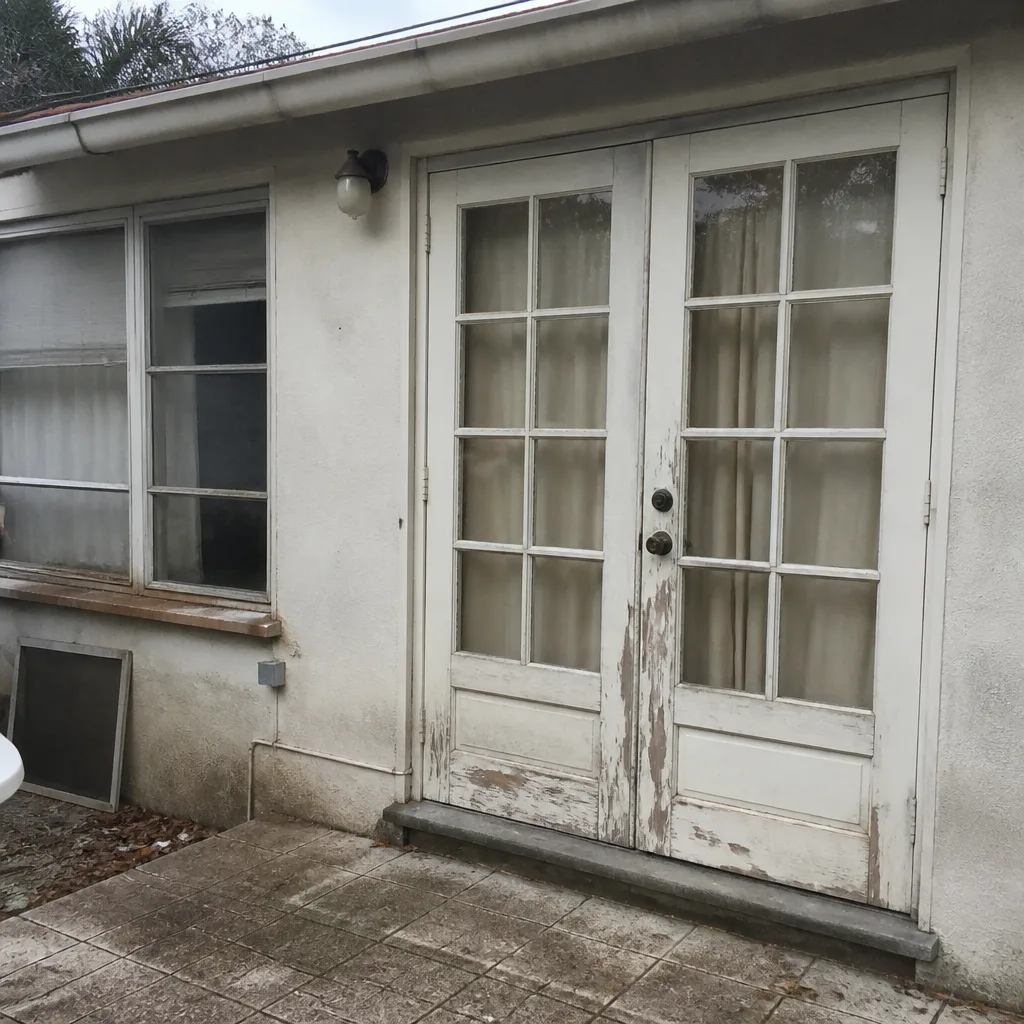 Before
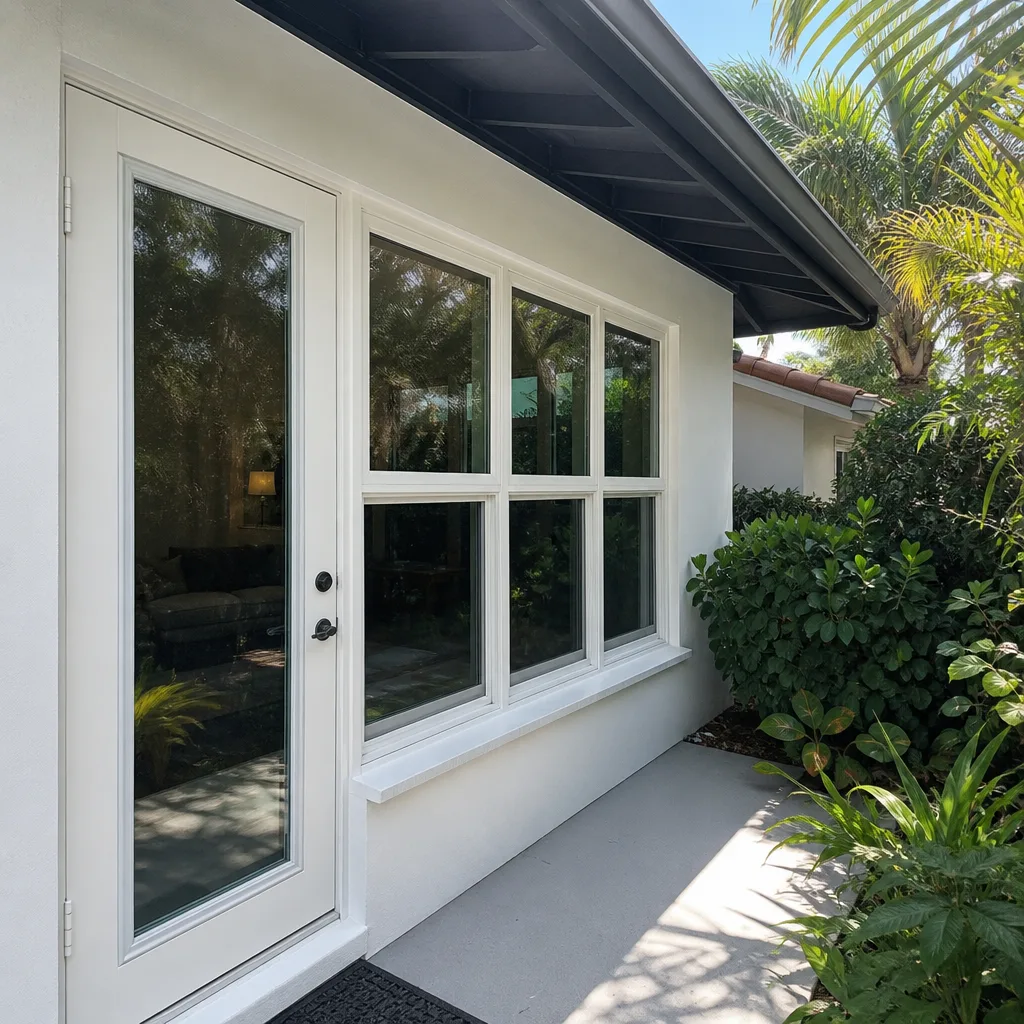 After
AfterTable of Contents
- Why Olympia Heights Has Two Seasons, Not Four
- Pre-Season: March-May Preparation Protocol
- In-Season: June-November Monitoring After Wind Events
- Post-Season: December-February Recovery and Restoration
- Cosmetic Weathering vs. Structural Degradation
- The Seasonal Log: Documentation for Insurance and Resale
- Common Mistakes to Avoid
- When to Call a Professional
- Frequently Asked Questions
Why Olympia Heights Has Two Seasons, Not Four
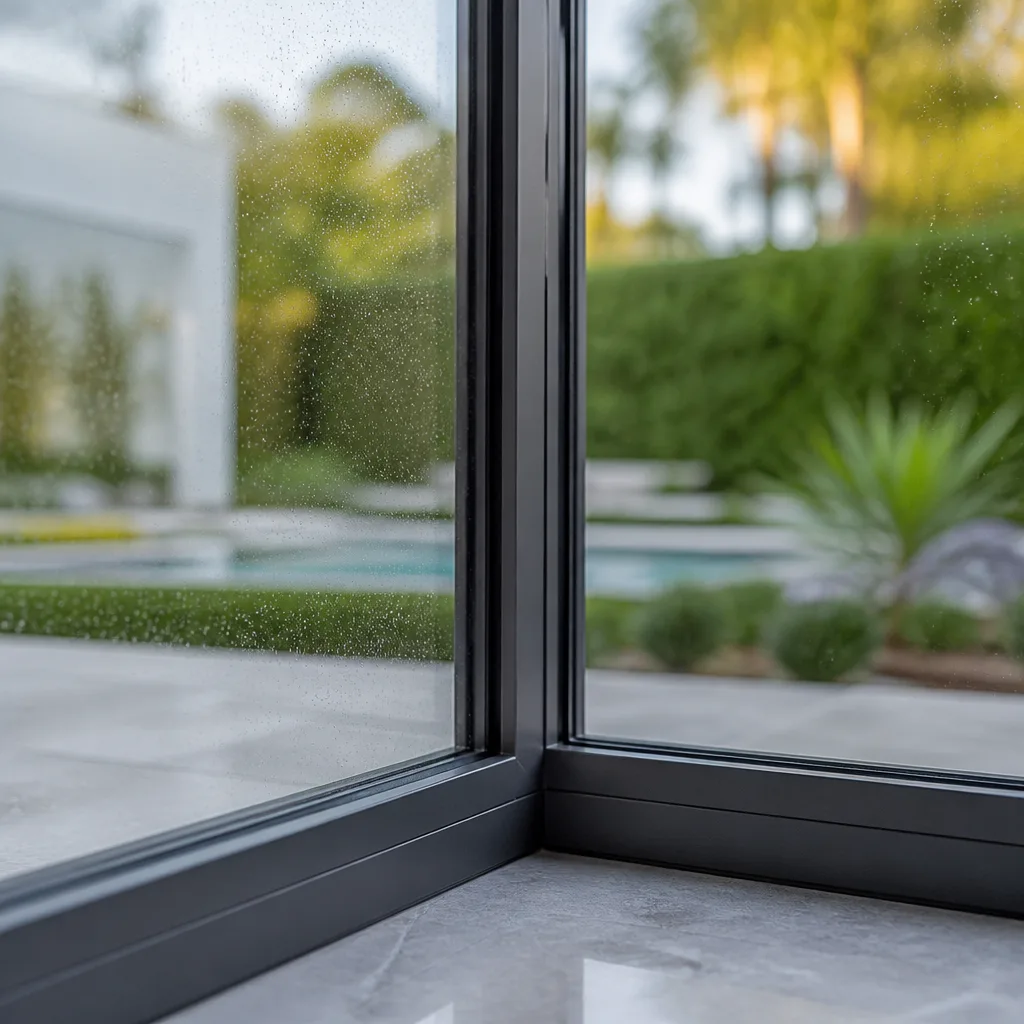
The standard home maintenance calendar - winterize in October, spring clean in April, caulk in September - assumes freeze-thaw cycling, deciduous leaf drop, and sustained sub-40°F temperatures. None of these apply in Olympia Heights. Our January average is 77°F. Our trees drop leaves during summer wet season, not autumn. And the real threat to window and door integrity isn’t frost heave; it’s pressure differential from tropical cyclones, UV degradation at 25° north latitude, and salt-air corrosion from Biscayne Bay’s prevailing easterlies.
We’ve measured this difference. In our work across Olympia Heights since 2012, frames within two miles of the water show fastener corrosion rates 40% higher than identical installations west of the Palmetto Expressway. The mechanism isn’t mystery; it’s chloride deposition from onshore flow. That geography should drive your maintenance schedule, not a national hardware store calendar.
The two-season framework looks like this:
- Pre-season (March-May): Preparation before June 1 hurricane season opener. Sealant adhesion testing, impact glazing inspection, shutter hardware verification, and weep hole clearance while humidity is moderate and materials are thermally stable.
- In-season (June-November): Event-driven monitoring. Post-storm checks for frame racking, water intrusion traces, and hardware fatigue after named storms or sustained 50+ mph winds.
- Post-season (December-February): Recovery and restoration. Salt residue removal, hardware lubrication with specified products, screen re-tensioning, and documentation compilation for insurance or resale.
This rhythm matches how buildings in Olympia Heights actually age. Windows don’t fail gradually here. They fail in steps - after a storm, after a salt season, after a summer of expansion cycling - and the maintenance schedule should catch each step before it becomes a leak or a security gap.
Pre-Season: March-May Preparation Protocol
March through April is the narrow window when sealant is neither too cold to adhere nor too expanded from summer heat to seat properly. We schedule our busiest survey period in these eight weeks because the measurements we take then - frame squareness, sash plumb, sealant bead continuity - will still be valid when we return to install.
Sealant Inspection Protocol
Check perimeter sealant at every window and door opening. You’re looking for three specific failure modes:
- Adhesive failure: Sealant pulling away from the frame or substrate. Probe gently with a plastic putty knife. If the bead lifts cleanly, the bond has failed even if the bead looks intact.
- Cohesive failure: Cracks or splits within the sealant body itself. Common in polyurethane and some silicone formulations after two-plus Miami summers.
- Compression set: Sealant flattened to less than 50% of original bead height, no longer able to accommodate thermal movement. Measure with a seam gauge or estimate against an uncut sample.
For resealing, specify sealants meeting ASTM C920 (elastomeric joint sealants) or AAMA 800 (voluntary specifications for sealants) at minimum. In Olympia Heights, we prefer neutral-cure silicones with UV stabilizers for exposed perimeters, and modified polyethers for high-movement joints. The product label should list Miami-Dade County approval or Florida Building Code compliance; if it doesn’t, it wasn’t formulated for this UV load and salt exposure. For a detailed Windows & Doors Cost Breakdown: The Olympia Heights Homeowner’s Reference for 2026, including material pricing, see our analysis.
Impact Glazing Surface Check
Impact-rated windows - required in Miami-Dade County since Hurricane Andrew - use laminated glass with an interlayer (typically PVB or ionoplast) that holds shards in place under impact. Micro-fractures in the glass surface can propagate under cyclic loading, and they’re often invisible until backlit.
Inspect impact glazing on overcast mornings or with a strong flashlight held at oblique angles to the pane. Look for:
- Conchoidal chips at edges or corners, where thermal stress concentrates
- Hairline surface cracks that catch light when viewed at 15-20 degrees
- Delamination “fog” at the glass-interlayer boundary, visible as a milky halo when backlit
Delamination exceeding 1/2 inch from any edge, or any through-glass crack, means the impact rating is compromised. The window may still hold, but it won’t perform to the ASTM E1886/E1996 large-missile standard it was certified to. Document with dated photos; this is insurance-relevant evidence.
Shutter Hardware Test
If your Olympia Heights home has colonial shutters, accordion shutters, or roll-down systems, test every track and lock mechanism in April. Salt accumulation from the previous season binds rollers and corrodes lock pins. Cycle each shutter fully open and closed three times. Lubricate tracks with a dry PTFE lubricant, not oil-based products that attract grit. Verify that locking pins seat fully; partial engagement won’t hold against pressure differential.
Weep Hole Flush
Weep holes - the small drainage channels at the bottom of window frames - clog with pollen, insect debris, and salt crust in Olympia Heights. Blocked weep holes trap condensation and drive water into the wall cavity. Clear them with a pipe cleaner or compressed air, then flush with fresh water. If water doesn’t drain freely within 10 seconds, the internal channel may be obstructed and needs professional clearing.
In-Season: June-November Monitoring After Wind Events
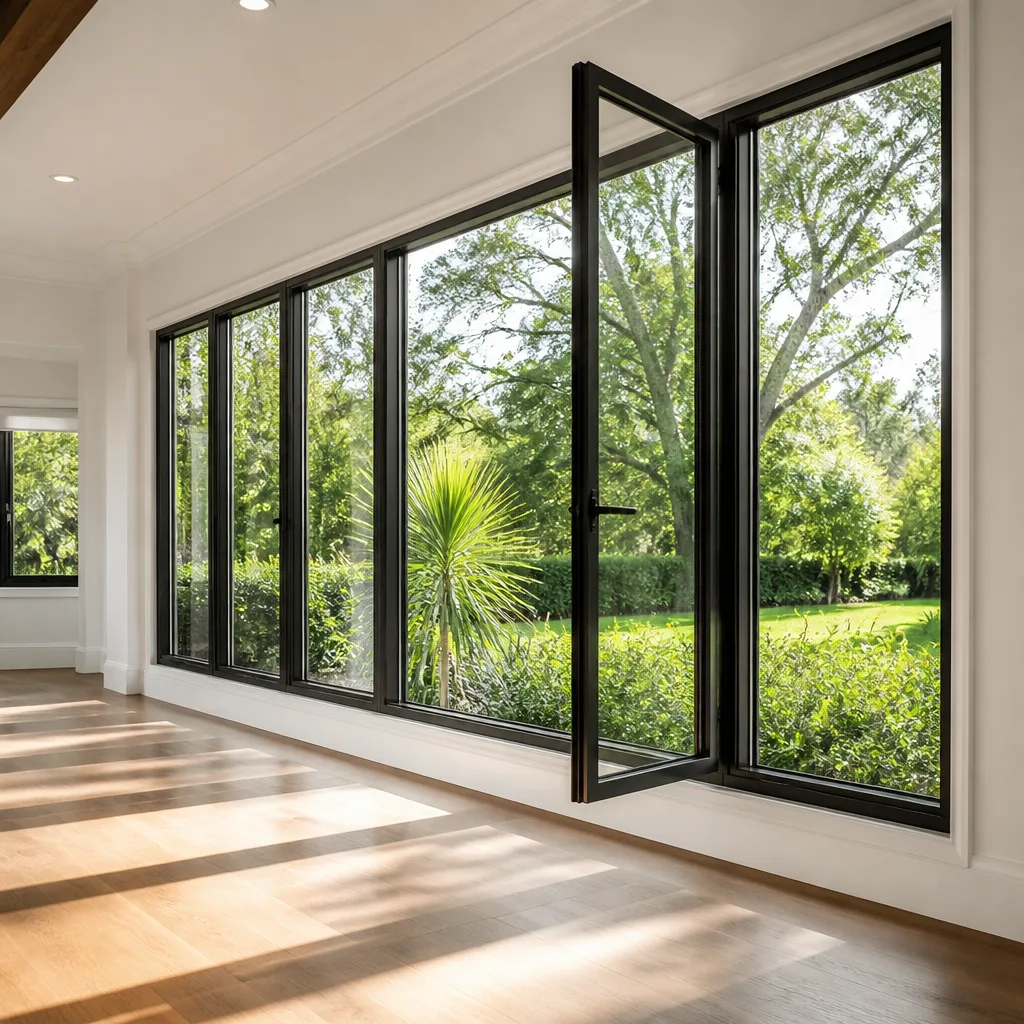
Hurricane season isn’t a passive waiting period. It’s an active monitoring phase. After every named storm or sustained wind event above 50 mph, windows and doors experience loading they weren’t designed for in daily use: pressure cycling, impact from windborne debris, and frame racking from building movement.
Post-Event Inspection: 24-Hour and 72-Hour Checks
We recommend two inspection timelines. The 24-hour check is safety and function: can you open and lock every operable window and door? Are there visible cracks, broken glass, or displaced frames? The 72-hour check is forensic: water intrusion traces often appear only after repeated wetting and capillary migration.
Frame racking indicators: Look for diagonal cracks in drywall at window corners, or doors that now bind in their frames. These indicate the rough opening has distorted under wind load. Measure with a 4-foot level placed across the sill and jambs; more than 1/4 inch out of level in any plane suggests structural movement that needs assessment.
Water intrusion trace points: Check these specific locations 48-72 hours after any driving rain event:
- Bottom corners of window frames, where sill pan flashing terminates
- Head flashing above doors, especially under covered entries where wind-driven rain deflects upward
- Interior trim at the meeting rail of double-hung windows, where sash alignment gaps allow bypass
- Floor coverings adjacent to sliding door tracks, where track drainage overflows
Staining, bubbling paint, or damp carpet padding at any of these points indicates a breach in the water management system. Mark the location, photograph it with a date stamp, and monitor for expansion. A single trace that dries and doesn’t recur may be wind-driven bypass; recurring stains after ordinary rain indicate a systemic failure.
Hardware Fatigue Checks
After major events, check locking hardware for deformation. Multi-point locks on patio doors can have individual bolts shear or bend without total failure. Test each locking point individually - the top bolt, bottom bolt, and hook bolts - by applying pressure to the door panel while engaging the lock. Any bolt that doesn’t seat firmly or shows visible distortion needs replacement, not adjustment.
For homes in eastern Olympia Heights near the bay, we also check fastener corrosion at exterior hardware quarterly during season. Stainless steel fasteners are required by code, but galvanic corrosion between dissimilar metals (aluminum frame + stainless screw + salt electrolyte) still occurs. Look for white powdery deposits or rust streaks at screw heads.
Post-Season: December-February Recovery and Restoration
December through February is when Olympia Heights windows and doors experience their lowest thermal stress. Ambient temperatures range from 60-80°F, humidity drops briefly, and the easterlies moderate. This is the window for restorative maintenance that requires material stability: deep cleaning, hardware service, and screen restoration. Follow our Window Installation Maintenance Checklist for Olympia Heights Homeowners to stay on track.
Salt-Air Residue Removal
Coastal Olympia Heights addresses - roughly east of SW 67th Avenue and anywhere within three miles of Biscayne Bay - accumulate chloride deposits on exterior surfaces that accelerate corrosion and etch glass if left through another season. The removal schedule depends on proximity:
- Within 1 mile of open water: Monthly fresh-water rinse during season, thorough cleaning in December and February
- 1-3 miles inland: Rinse after named storms, thorough cleaning in January
- West of SW 67th Avenue: Standard annual cleaning, unless specific exposure conditions exist
Use a mild detergent solution (pH 7-8) and soft brush or microfiber. Avoid ammonia-based cleaners on coated glass; they degrade low-emissivity (low-E) coatings. For anodized aluminum frames, test any cleaner on an inconspicuous area first; alkaline cleaners above pH 9 can etch the anodized layer. Rinse thoroughly with fresh water - residual detergent attracts moisture and holds salts against the surface.
We’ve documented frame corrosion in installations across Olympia Heights where homeowners used pressure washers annually. The high-pressure stream drives water past weatherstripping and into frame cavities, where it accelerates hidden corrosion. Use low-pressure rinse only, directed downward, never at gasket interfaces.
Hardware Lubrication with Documented Products
Lubricate all moving hardware in January, when humidity is lowest and products won’t attract immediate moisture contamination. Specify the product; “oil” is not sufficient documentation for warranty or resale purposes. We use and recommend:
- Hinges and pivots: White lithium grease, NLGI Grade 2, with PTFE additive
- Locking mechanisms: Dry graphite powder or PTFE spray, never oil-based (attracts dust, gums in heat)
- Sliding and rolling hardware: Silicone-based lubricant meeting ASTM D2266 wear test standards
Record the product name, date, and technician in your seasonal log. This documentation becomes evidence of proper maintenance if hardware fails under warranty or in a product claim.
Screen Re-Tensioning
Fiberglass and aluminum screens loosen under constant tension and thermal cycling. Loose screens billow in wind, fatigue the spline, and eventually tear. Check screen tension by pressing the center of the mesh; deflection should not exceed 1/2 inch for standard 18×16 mesh. If the screen drums or rattles in breeze, the spline has compressed or the frame has expanded.
Rescreening with new spline is straightforward for standard sizes. For large openings - common in sliding door installations in Olympia Heights - heavy-duty mesh (20×20 or pet-resistant) requires tighter spline engagement and often frame reinforcement to prevent bowing.
Cosmetic Weathering vs. Structural Degradation
Not every change in appearance signals failure. Distinguishing cosmetic weathering from structural degradation saves unnecessary replacement costs and, conversely, prevents dangerous deferral of real problems.
Cosmetic Weathering: Monitor, Don’t Replace
Chalking: Powdery residue on painted or coated aluminum frames. This is UV degradation of the topcoat, not the substrate. Measure severity by wiping with a dark cloth; light transfer that cleans easily is normal aging. Heavy transfer that streaks and won’t wipe clean indicates coating failure approaching substrate exposure.
UV color shift: Vinyl and some painted finishes shift toward yellow or brown under Miami’s UV load. This is aesthetic, not functional, unless accompanied by surface crazing (fine cracking). Document color with photos for warranty claims; many manufacturers cover excessive shift under 10-20 year finish warranties.
Anodized finish variation: Slight mottling or lightening of anodized aluminum is normal. Pitting, white spotting, or brown staining indicates anodized layer breach and active corrosion.
Structural Degradation: Assess Immediately
Delamination in laminated glass: Any milky boundary zone exceeding 1/2 inch, or visible bubbles in the interlayer, compromises impact resistance. This is not cosmetic. The ASTM E1886 test assumes intact lamination; delaminated glass may shatter on impact rather than holding shards.
Sealant separation: Any gap between sealant and substrate wider than 1/8 inch, or sealant that lifts under gentle probe pressure, creates a water and air infiltration path. In Olympia Heights, this also creates a wind-pressure bypass that can drive rain into wall cavities even without direct glass failure.
Frame warp: Measure with a straightedge. Vinyl frames showing more than 1/8 inch bow in 6 feet, or aluminum frames with visible twist, indicate material stress or installation failure. Warped frames don’t seal properly and accelerate hardware wear.
Threshold measurement: For the boundary between DIY and professional assessment, we use this rule: if the issue affects water management, air infiltration, or structural integrity, document it and call for evaluation. If it affects appearance only, document and schedule for the next maintenance cycle.
The Seasonal Log: Documentation for Insurance and Resale
Every maintenance action should leave a record. In Olympia Heights, this isn’t bureaucratic excess; it’s practical protection. Insurance adjusters after Hurricane Irma and Ian asked for maintenance documentation to distinguish storm damage from pre-existing neglect. Buyers in our market increasingly request window and door condition disclosures with supporting evidence. Explore more guides & resources for maintaining your home year-round.
We provide every replacement customer in Olympia Heights with a bound copy of their measured survey, written scope, and photo record under Haven Clause 1 (Have it in writing) and Haven Clause 4 (Evidence on every job). Homeowners should extend that documentation habit to maintenance.
One-Page Seasonal Log Template
Structure each entry with these fields:
- Date: Specific, not month-only
- Address/Opening: Room and orientation (e.g., “Master bedroom, east-facing slider”)
- Task: Specific action performed
- Product/Standard: Sealant brand and ASTM compliance, lubricant type, cleaner pH
- Measurement: Quantified finding - sealant bead height, screen deflection, frame level reading
- Condition rating: 1 (new/like new), 2 (serviceable, monitor), 3 (needs professional assessment), 4 (failed)
- Photo reference: File name or cloud link
- Technician: Self or professional, with contact if applicable
Store logs with dated photos in cloud storage, not solely on a device. After any named storm, add a specific storm entry with pre-storm condition, post-storm inspection findings, and any insurance claim numbers. This creates a continuous record that demonstrates due diligence.
For resale, a complete maintenance log with photo evidence differentiates a property in Olympia Heights’s competitive market. It also transfers to the buyer, who can continue the record with their own entries.
Common Mistakes to Avoid
- Applying northern-climate maintenance calendars. Winterizing with plastic film, checking for ice dam damage, and scheduling “spring” caulking in March all misalign with Olympia Heights’s actual climate stressors. The relevant calendar runs June-November for risk, March-May for preparation.
- Using oil-based lubricants on window and door hardware. In Miami’s heat and humidity, oil attracts dust and polymerizes into gum that binds mechanisms. We’ve replaced more hardware gummed with WD-40 than corroded by neglect. Use dry PTFE or graphite specified for the application.
- Pressure-washing window and door frames. The stream drives water past weatherstripping, into weep holes at velocity that damages internal baffles, and against sealant beads with force that can separate fresh applications. Low-pressure rinse, always downward, never at gasket interfaces.
- Ignoring micro-fractures in impact glazing. A chip smaller than a dime at the edge of a laminated pane can propagate under cyclic loading and compromise the entire impact rating. “It’s still holding” is not a structural assessment.
- Deferring post-storm inspection until visible leaks appear. Water intrusion traces often manifest 48-72 hours after the event, and by then capillary migration has wetted insulation and framing. Inspect at 24 hours for function, 72 hours for forensic traces.
- Using non-UV-stable sealants for exterior perimeter repair. Standard hardware store silicone without UV stabilizers chalks and cracks within 18 months in Olympia Heights exposure. Specify ASTM C920 with UV resistance, or AAMA 800 compliance, and verify on the product label.
- Failing to document maintenance actions. Without dated photos and product specifications, a warranty claim or insurance dispute becomes your word against the manufacturer’s or adjuster’s. Haven Clause 4 exists because evidence prevents disputes.
When to Call a Professional
Some conditions exceed homeowner maintenance scope. Call for professional assessment when you find: delamination in laminated glass of any measurable extent; frame racking or warp exceeding 1/4 inch out of level; recurring water intrusion traces after two or more rain events; hardware deformation or locking mechanism failure; or sealant separation that reoccurs within 12 months of reapplication. These indicate systemic issues - installation deficiency, product failure, or structural movement - that surface maintenance won’t resolve.
Sightline Windows & Doors Olympia Heights offers free estimates in Olympia Heights. Our measured survey produces a written scope and price before any work is proposed, under Haven Clause 1. Call (786) 400-2761 to schedule.
Frequently Asked Questions
Professional window and door maintenance in Olympia Heights typically ranges from $150-$400 for a standard single-family home inspection and basic service, with sealant replacement adding $8-$15 per linear foot of perimeter. Full-frame assessment with documentation for insurance runs $250-$500. Call (786) 400-2761 for an exact quote - estimates are free, and we review competitor written estimates at no charge under our Free Second Opinion policy.
Inspect impact windows annually in March-April before hurricane season, and after every named storm or sustained 50+ mph wind event during season. Homes east of SW 67th Avenue or within three miles of Biscayne Bay should add a mid-season hardware corrosion check in August. The inspection protocol: visual surface check for micro-fractures, sealant probe test, and lock function verification.
Both CWS and ES Windows manufacture Miami-Dade-approved impact-rated products, but they optimize for different performance tiers. CWS lines typically emphasize thermal performance with lower U-factors, suited for west-facing openings in Olympia Heights that receive afternoon solar load. ES Windows often leads in large-opening structural capacity, relevant for custom geometric windows and sliding door systems. We specify by opening requirements under the Haven Standard, not by inventory position. Both manufacturers appear in our documented photo records from Sightline Windows & Doors Olympia Heights installations.
No. Haven Clause 1 states that the measurement and the quote are the same document. The price we write before any work starts is the price on the final invoice. If we encounter concealed damage during maintenance - rot in a rough opening, for example - we document it, stop work, and provide a revised written scope before proceeding. No surprises.
Routine maintenance - cleaning, lubrication, sealant touch-up, screen replacement - does not require permits. Replacement of entire window or door units, or any modification to the rough opening, requires a Miami-Dade County building permit with product approval documentation. We pull all permits for installation work and schedule inspections as required. Maintenance customers receive documentation of what was done, but no permit is involved.
Probe the sealant bead gently with a plastic putty knife. If it lifts from the substrate, replace it. If it remains bonded but the surface is chalky or dirty, clean it and assess again. Cohesive cracks within the bead body also require replacement. A clean, well-bonded bead with minor surface oxidation can be renewed with a compatible sealant primer in some cases. When in doubt, photograph and call for assessment - we review photos at no charge for established customers.
Quality hardware from manufacturers like those in our lines - including hardware paired with ECO Window Systems and Therma-Tru products - should function 15-20 years with proper maintenance. Salt-air exposure within two miles of open water reduces this to 10-15 years without quarterly rinsing. The failure mode is usually corrosion at fasteners or polymer degradation in nylon rollers, not the metal mechanisms themselves. Documented annual lubrication with specified products extends service life measurably.
The Bottom Line
Window and door maintenance in Olympia Heights follows a two-season rhythm: prepare before June, monitor through November, recover from December to February. The specific tasks - sealant inspection to ASTM standards, impact glazing checks for micro-fractures, post-storm forensic inspection at 72 hours, salt-residue removal by proximity to water, and hardware lubrication with documented products - are calibrated to this climate, not imported from northern templates. Distinguish cosmetic weathering from structural degradation with measurement thresholds, and maintain a seasonal log with photos for insurance and resale. The cost of systematic maintenance is modest against the cost of water damage, security failure, or premature replacement.
Call (786) 400-2761 to schedule your free estimate. Every engagement begins with a measured survey you keep, and the written price before any work starts is the price on the final invoice - Haven Clause 1, unchanged since 2012.
Written by Sonia Raman, Owner at Sightline Windows & Doors Olympia Heights, serving Olympia Heights since 2012.
Six Reasons Homeowners Choose Sightline Windows & Doors Olympia Heights
Impact systems engineered to design pressures up to +/-100, matched to your wind zone - your openings hold when the storm arrives.
Low-E insulated impact glass from our manufacturer lines commonly cuts monthly cooling bills 20-30%.
Laminated impact glass shuts out up to 40% of outside noise - traffic, neighbors, weather.
Monitoring services run $30-90 a month. Laminated impact glass resists forced entry around the clock, with no subscription.
Florida homeowners average around 25% savings on the windstorm portion of their policy after protecting every opening - some homes qualify for more.
A full impact package upgrades curb appeal, buyer confidence and appraised value in one project.
Other Sightline Windows & Doors Olympia Heights Services
What Neighbors Say About Sightline Windows & Doors Olympia Heights